
Community Leaders: Don’t ask the wrong question when a data center arrives, like what will the developer give us? A better question is:
What could our community become because the data center came?
A large data center can represent billions of dollars of investment and remain in a community for decades. That gives a community something it rarely has when negotiating economic development: leverage, time and a well-capitalized partner that needs something the community controls. Land. Use that leverage for more than a community center, a road improvement or a one-time payment.
Start with the basics.
Defense: The data center should pay its own way. Richland Parish’s teacher bonuses come from a tax structure. In Michigan, Oracle’s data center developer must pay for 80 percent of its contracted power for 19 years whether it uses it or not and is responsible for the cost of the batteries built to serve it. Georgia’s rate freeze through 2028 was approved by state regulators. These were not promises; they were requirements.
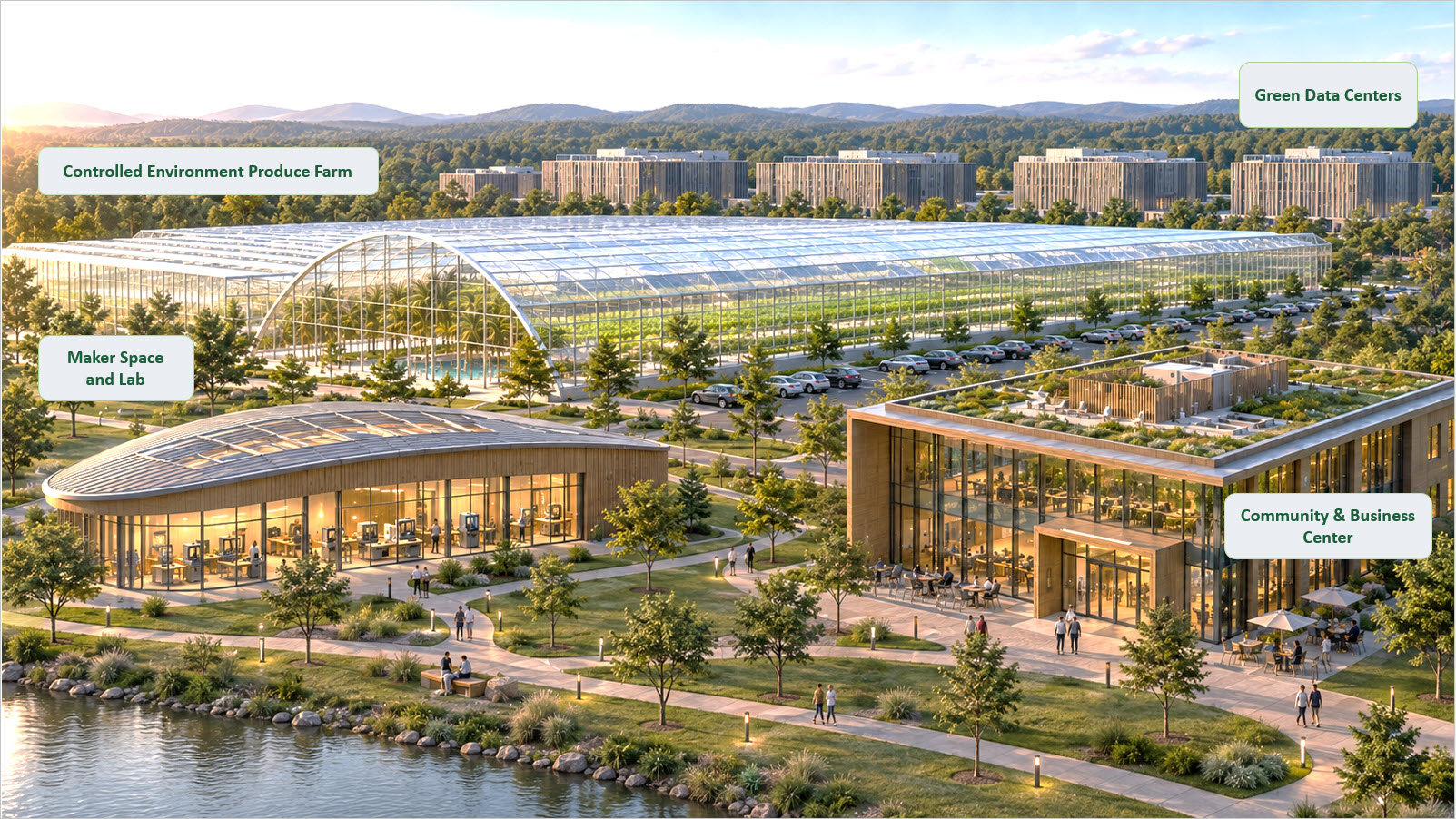
Offense: Suppose a community used the arrival of a data center to think seriously about where it wants to be in 10 or 20 years.
- Could it create technical and AI programs in its schools?
- Could it build workforce training tied to actual employers and operating facilities?
- Could local colleges and researchers gain access to computing resources they could never otherwise afford?
- Could entrepreneurs get technical assistance and infrastructure?
- Could waste heat support greenhouses or other businesses?
- Could new trails, parks, broadband, community facilities or other amenities make the community a better place to live?
That is where the relationship with the data center becomes important.
Instead of simply asking the developer for money, ask for time, resources and expertise to help the community determine what is possible. Bring in universities. Engineers.
Economic-development organizations. Educators. Entrepreneurs. Utilities. Local businesses. Citizens. Give them the resources to investigate ideas, determine what is technically and economically realistic, and develop an actual plan.
Publish the requirements before anyone files an application. Establish the environmental and economic protections. Then identify the investments, expertise and partnerships that could help advance the community’s own long-term goals. Let developers compete to meet those terms.
Now the question changes:
FROM: “What will you give us if we let you build here?”
TO: “Here is where our community wants to go. Show us how your investment can help us get there.”