WHY HUMANS + AI TOGETHER?
AI excels at ordered, repeatable tasks but hits a hard ceiling with wicked problems — dynamic challenges with no right answers. Human adaptive expertise navigates where algorithms cannot.
Deep expertise relies on tacit knowledge— internalized intuition built through 10,000+ hours. AI can’t access what human experts know (but cannot tell). Humans are the essential fail-safe for AI workflows.
With $50B+ in annual AI hallucination losses, human expertise is the only viable trust layer — turning probabilistic guesses into reliable business decisions.
✔ With Human Expertise + AI Agents
Achievable innovations are everywhere you look.
✘ With just AI Chatbots
Left behind in the most significant tech shift ever.
The future is not AI. The future is AI + human experts + continual human learning loops.
KNOWLEDGE EXCHANGE THEORY
Combinatorial explosion in socio-technical systems drives opportunity but also risk
Richness alternating with dissipation — knowledge decays without active maintenance
Necessary for cognition and communication, but leads to critical information loss
REASONING COMPLEXITY SCALE →
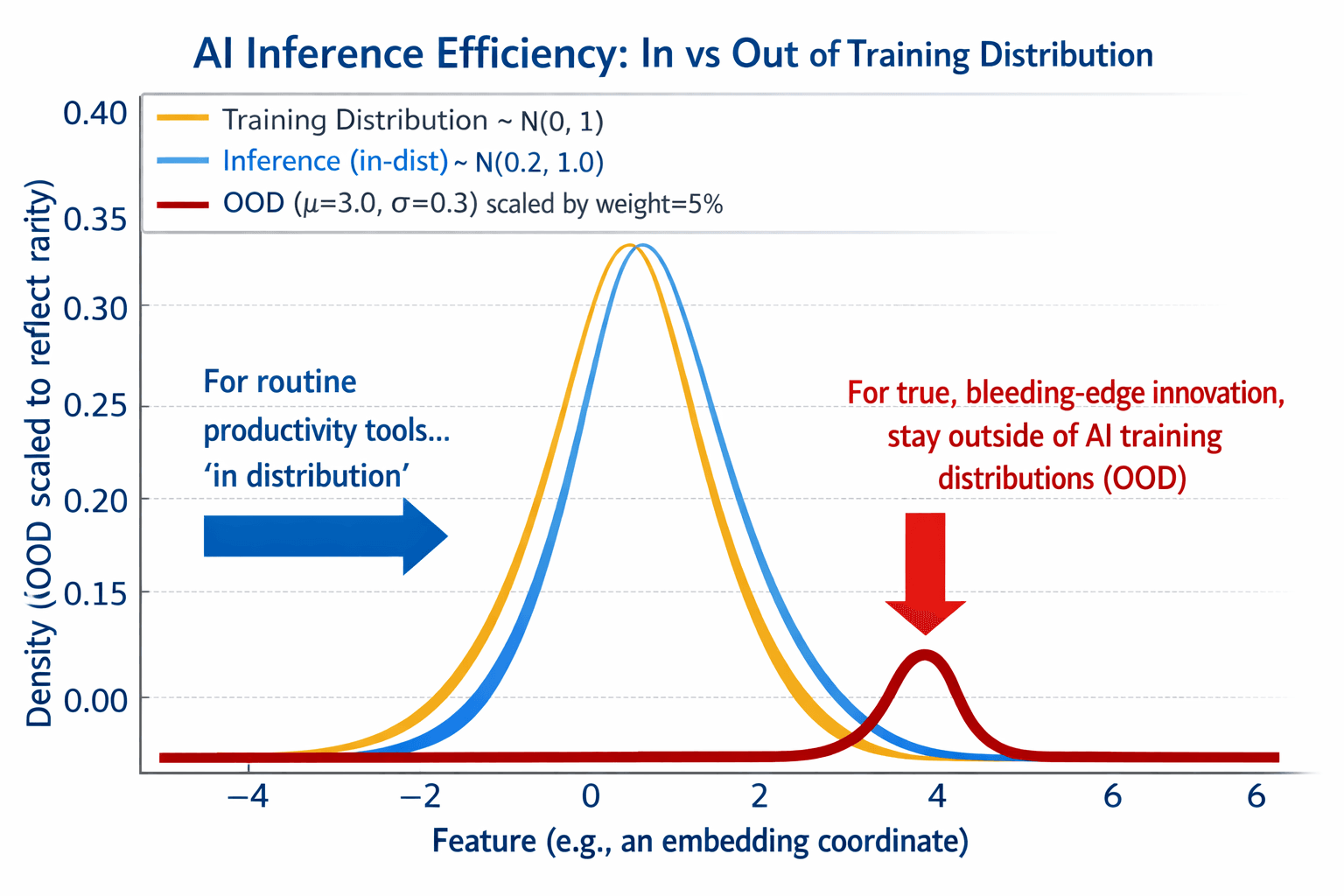
If you investigated, you would likely be amazed by how many workflows and operational processes in your org are ‘beyond linear’ in their complexity. As complexity scales from linear to polynomial to exponential, LLMs degrade sharply. Long-chain reasoning breaks, hallucinations appear, and outputs “sound right” but are wrong.
| Complexity Class | Notation | Explanation |
|---|---|---|
| Constant | O(1) | The execution time remains exactly the same, regardless of how much data is added. |
| Linear | O(n) | The execution time grows in direct proportion to the size of the input, usually denoted as n. |
| Quadratic | O(n²) | The execution time grows proportionally to the square of the input size. |
| Cubic | O(n³) | The execution time grows proportionally to the cube of the input size. |
| Exponential | O(bᵈ) | The execution time multiplies by a base factor for every single element added to the input. |
O = Big O notation (worst-case growth rate) • n = number of discrete entities in the input • b = branching factor • d = depth of reasoning chain
HUMAN EXPERTISE IS NON-OPTIONAL FOR AI APPS
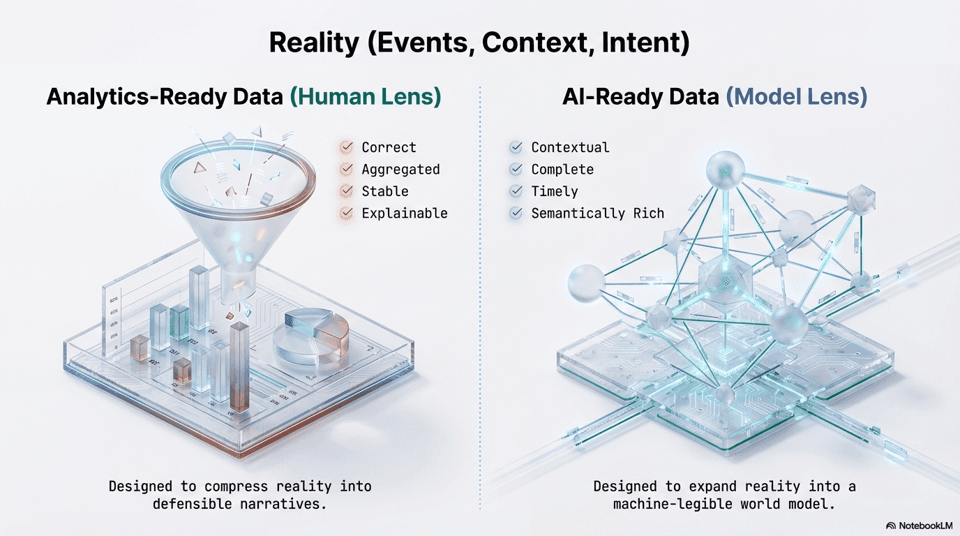
AI excels in known domains but hits a hard ceiling in complex “out of training distribution” problem spaces that require adaptive expertise and human intuition
AI trains on explicit data, but deep expertise relies on internalized intuition that cannot be codified
AI reduces variety, leading to model autophagy. Humans inject requisite variety to prevent brittleness
Automation removes the training ground juniors need. Without human-in-the-loop, the expert pipeline breaks
Human expertise is the only viable mechanism for trust and liability in high-stakes decisions
HUMAN EXPERT VS. AI
Source of accuracy and resilience that prevents systemic brittleness
Hard ceiling in complex socio-technical domains
The human expert is the antidote for system complexity that current language models can’t handle.
A source of accuracy and resiliency that prevents systemic brittleness and stochastic hallucinations.
THEORY MEETS PRACTICE
“If a building doesn’t encourage collaboration, you’ll lose a lot of innovation and the magic that’s sparked by serendipity.”
— Steve Jobs, on Pixar’s Atrium
Steve Jobs proved that serendipitous collisions between diverse expertise produce breakthrough innovation.
The theory confirms it: Cynefin shows complex domains need adaptive expertise. Polanyi proves tacit knowledge can’t be codified. Ashby demands requisite variety.
GreenPlex Knowledge Exchange platforms are the digital atrium — the space where human experts, knowledge workers and AI agents converge.
Join us in this quest...
To unite human expertise and AI in lightly structured knowledge workflows — at scale.
© GreenPlex.ai 2026 | We Scale Expertise
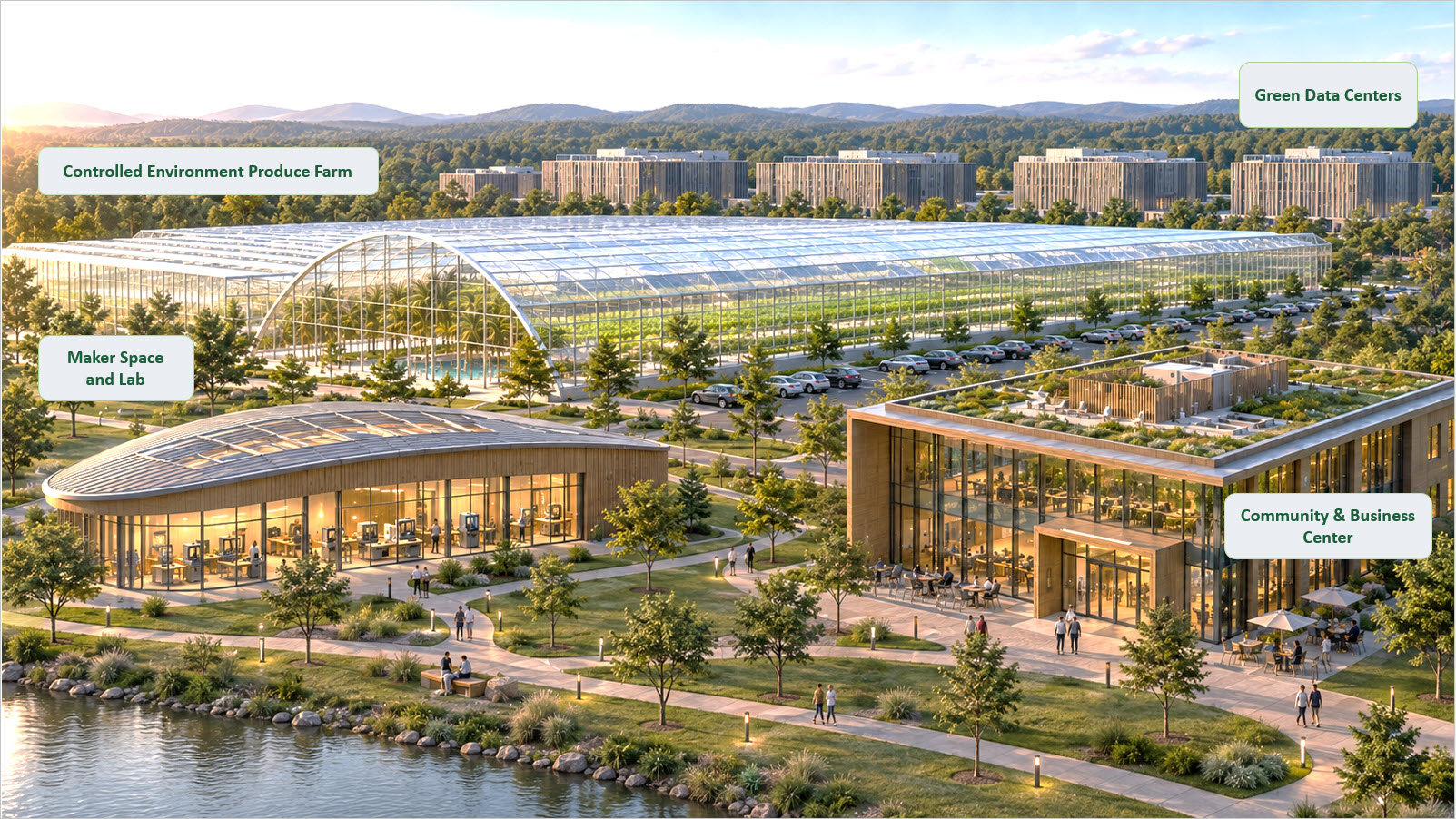
Our mission is to give communities a fair deal when data centers come to town and become a permanent aspect of the local landscape.
GreenPlex is a green living, playing, working campus built to answer the needs of the Citizens, a campus the community specifies. Organizationally, GreenPlex is comprised of formal partnerships between universities, communities, facilities developers, virtual energy providers, collaboration engineers and AI experts.
Let’s collaborate! Please get in touch:
The question isn’t whether communities should say yes or no to data centers. The question is why wait for data center developers to tell us what we’re getting.