Estimated reading time: 5–6 minutes
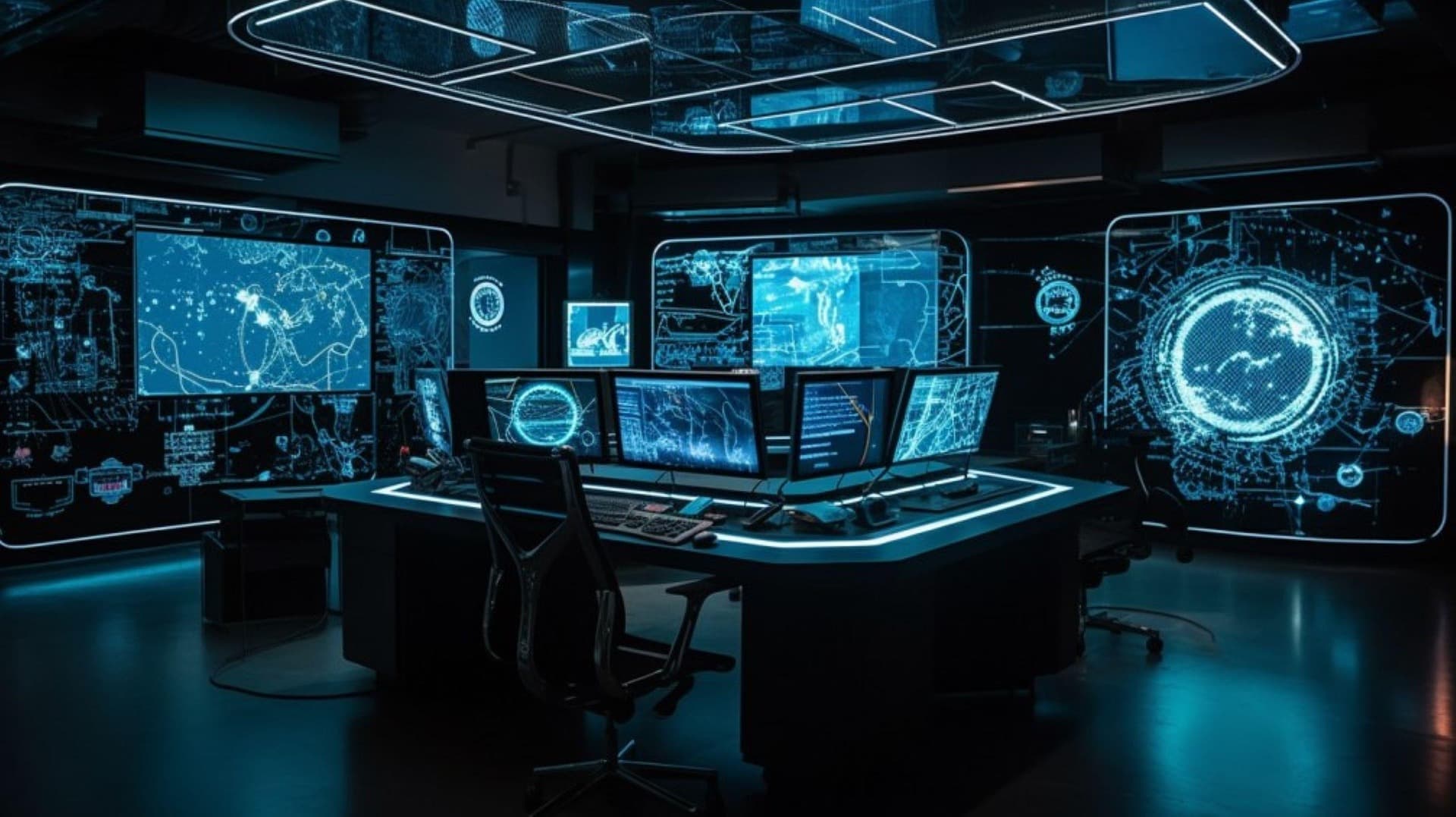
Featured visual: Human security analyst + AI agent reviewing dashboards, servers, and shield icons in a modern enterprise environment.
AI in Cybersecurity: Powerful, Promising, and Potentially Risky
Cybersecurity and information security teams face an enormous daily workload. They review patches, investigate anomalies, monitor for configuration drift, document findings, validate security controls, and respond to incidents across environments that are often large, dynamic, and imperfectly standardized.
Given that reality, the temptation to use AI agents for this work is obvious.
And in many ways, that temptation is justified.
Modern frontier models are already capable of reading technical documentation, parsing release notes, comparing system states, summarizing risk, and generating useful reports. Over time, AI will almost certainly become a major force multiplier for production cybersecurity and infosec operations.
But the path matters.
The wrong way to do this is to treat AI as an autonomous security engineer and let it operate freely in production with broad permissions. The right way is more controlled, more incremental, and much more realistic.
Key Takeaway
The safest path to AI in production security is not full autonomy — it is tightly controlled collaboration between AI agents and human experts.
Start in Staging, Not in Production
One of the best ways to begin is to run AI agents in staging systems, test environments, and non-production infrastructure.
This gives teams a safe place to learn what the agent does well, where it makes mistakes, and how its outputs should be reviewed. It also allows security leaders to define permissions carefully from the start: no elevated privileges, no arbitrary command execution, and only a limited set of approved tools.
That first step alone can create real value.
For example, an AI-driven workflow can be tasked with reviewing pending operating system patches, locating and parsing vendor documentation, summarizing which patches are high priority, and flagging which updates are likely to require scheduled downtime. That is meaningful support for a human security or platform team — without granting the AI unrestricted power over live systems.
Another excellent early use case is configuration reporting.
In complex environments, configuration drift is almost inevitable. Teams may work hard to standardize settings across servers, network nodes, IAM roles, containers, and applications, but real-world contingencies always arise. Someone loosens a setting to solve a temporary issue. A firewall rule changes during an incident. A service account gets broader permissions than intended. Over time, the actual environment drifts away from the documented baseline.
AI is already good at helping with this kind of comparison work.
It can inspect configurations, compare them against approved standards, identify inconsistencies, and generate readable summaries for human review. That is well within the reasoning ability of current-generation models, especially when the task is bounded, repeatable, and read-only.
Good Early AI Security Tasks
🔍 Configuration drift reporting
🧾 Patch note and readme analysis
📊 Compliance and baseline summaries
📁 Routine evidence gathering
⚠️ Escalation of anomalies to humans
The Secret Is the Scaffold
The key to safe adoption is simple:
The AI should not be improvising.
It should not invent novel commands, create its own remediation logic, or operate outside a procedural boundary. Instead, it should be embedded inside a scaffold of approved workflows, narrow permissions, and mature automation tooling.
This is where frameworks like Ansible become especially important.
Ansible is widely trusted because it provides structured, auditable, and repeatable automation. Rather than letting an AI decide how to perform a task from scratch, organizations can require it to invoke only known Ansible playbooks or similarly approved routines. In that model, the AI is not acting as an unconstrained operator. It is acting more like an intelligent coordinator and interpreter sitting on top of proven automation.
That changes the nature of the trust question.
It is no longer:
Can we trust the AI to do whatever it thinks is best?
It becomes:
Can we trust the AI to choose among a constrained set of approved procedures under controlled conditions?
That is a much safer proposition.
Safe Pattern vs. Unsafe Pattern
Safe Pattern
- AI reads documentation, logs, and configuration state
- AI summarizes findings and recommends action
- AI invokes only approved routines
- AI operates with least-privilege credentials
- Humans review high-impact or unusual cases
- Every action is logged and auditable
Unsafe Pattern
- AI improvises shell commands
- AI has broad production access
- AI changes systems directly without approval gates
- AI handles novel incidents alone
- AI operates without rollback controls or audit trail
The Real Risk Is Unbounded Action
The issue is not that AI is inherently unsafe. The real danger is unbounded action.
If an AI agent can execute arbitrary commands, modify configurations freely, or access broad credentials across production, then even a small misunderstanding can create outages, introduce compliance issues, or expand the attack surface. In security, a near-correct action can still be a damaging action.
By contrast, if the AI can only trigger known automation routines with limited parameters, under least-privilege credentials, and with logging, rollback, and approval controls where appropriate, then the blast radius is dramatically reduced.
That is why safe AI adoption in infosec is not mainly about trusting the model itself. It is about engineering a trustworthy control plane around the model.
A Practical Maturity Path
Organizations do not need to jump directly from experimentation to autonomous production remediation. A more mature path looks like this:
1. Read-only discovery in non-production
Use AI for patch analysis, release-note parsing, documentation review, baseline comparison, and reporting.
2. Controlled execution in staging
Allow the AI to invoke only approved routines for narrow, low-risk tasks through tools such as Ansible.
3. Human-reviewed outputs
Measure accuracy, relevance, false positives, missed issues, and operational usefulness.
4. Limited production actions
Graduate only a small class of reversible, well-understood tasks into production.
5. Escalation for anything novel
If a case does not map cleanly to approved procedures, the AI stops and alerts the human team.
Humans Still Own the Unknowns
This is where the human security team remains indispensable.
When the AI encounters something ambiguous, novel, or outside the scope of approved routines, it should not invent a solution. It should escalate. Human analysts then investigate, conduct forensics, make decisions, and document any new procedures that emerge from the situation.
Over time, that creates a healthy cycle:
- humans handle the unknowns,
- organizations codify successful responses,
- AI later learns to assist with those responses in read-only mode,
- and only after sufficient validation does it gain permission to support controlled execution.
That is how trust is earned in security operations: not through blind autonomy, but through progressive codification of expert knowledge.
The future of cybersecurity is not AI replacing security teams. It is AI absorbing repetitive analysis while human experts retain judgment, escalation, and accountability.
Why This Works So Well in Infosec
One reason AI is so promising in cybersecurity is that much of the day-to-day work is procedural and already understood. Patch prioritization, baseline checks, documentation analysis, evidence gathering, and routine remediation flows are not mysterious problems. They are structured problems performed at scale.
That is exactly where AI can help.
It can improve consistency. It can reduce analyst fatigue. It can surface issues faster. It can help teams keep pace with sprawling infrastructure and documentation. But it should do so inside clear constraints, not as an independent actor making up its own operational logic.
In other words, the best role for AI in infosec is not “autonomous defender.” It is bounded collaborator.
Conclusion: Yes, But Only With Guardrails
So, is it safe to use AI for cybersecurity and infosec protection tasks in production application environments?
Yes — if you introduce it with strict boundaries, proven automation, least privilege, auditability, and human oversight.
Start in staging. Start read-only. Let AI inspect, compare, summarize, and report. Use established tooling such as Ansible to constrain what execution looks like. Measure outcomes. Expand carefully. Keep humans in charge of anything novel, high-impact, or ambiguous.
That is how organizations can capture the upside of AI without surrendering operational control.
The future of strong security posture will not come from humans or AI working separately. It will come from close collaboration between AI agents and human security experts, each doing the part they are best suited to do.