If you've ever wondered how a Transformer model like GPT can take a simple string of words and extract deep meaning from it, the answer lies in a surprisingly elegant architectural pattern: the constant interplay between low and high dimensional spaces. Rather than processing everything in one fixed representation, the Transformer repeatedly compresses information into a compact form, expands it into a vast working space for analysis, and then compresses it again.
This rhythmic expansion and contraction is not just an implementation detail — it is the core mechanism through which these models learn to reason. Below, we break down exactly how this works and why it matters.
1. The Low Dimension: The Residual Stream ()
The “low” dimensional aspect is the Residual Stream (or model dimension).
- What it is: This is the primary data highway that runs through the entire model, from the input embeddings at the bottom to the final output prediction at the top.
- Dimensionality: This is often denoted as . For example, in GPT-3, this is 12,288; in smaller models like BERT-Base, it is 768.
- Function: It carries the “compressed” representation of the token. Because it is lower-dimensional compared to the FFN inner layers, it forces the model to maintain a dense, efficient representation of the information.
2. The High Dimension: The FFN Hidden Layer (𝑑𝑓𝑓)
The “high” dimensional aspect is the hidden layer inside the Feed-Forward Network.
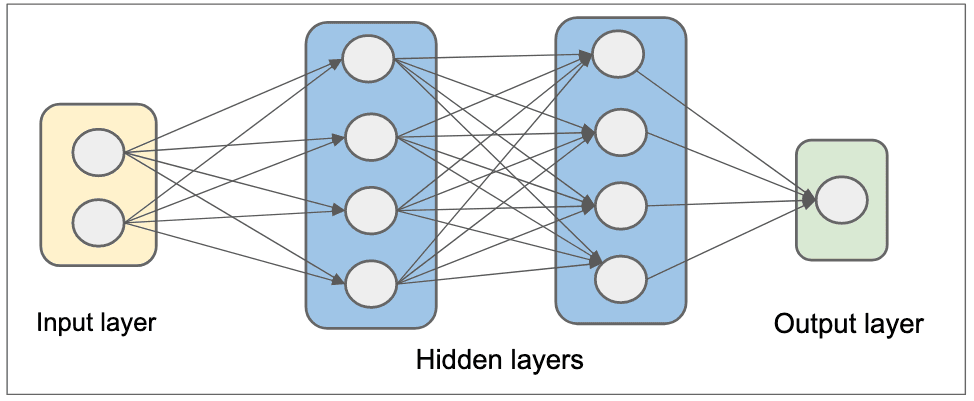
- What it is: Inside every Transformer block, the data leaves the residual stream and enters an FFN. This network projects the data up into a much larger space, applies a non-linear activation function, and then projects it back down.
- Dimensionality: This is typically the size of the residual stream ().
- Example: If your residual stream is 768, the FFN hidden layer might be 3,072.
- Function: This high-dimensional space is where the model “thinks” or processes facts. By projecting data into a higher dimension, the model can “untangle” complex relationships and perform non-linear operations (using the activation function) that wouldn’t be possible in the compressed lower dimension.
3. Alternating Weights and Activations
This process can be thought of as “weights alternating with activation functions.” This happens specifically in the FFN block:
- Up-Projection (Weight Matrix 𝑊1): Takes the vector from Low () High ().
- Activation Function: Applied here in the high-dimensional space.
- Note: While you mentioned Softmax, it is rarely used here. The activation in the FFN is usually ReLU, GeLU, or SwiGLU. Softmax is almost exclusively used in the Attention mechanism to calculate probabilities.
- Down-Projection (Weight Matrix ): Takes the vector from High () Low ().
Summary Visualization
Think of it like a highway (Low Dim) with pit stops (High Dim):
- Highway (): Traffic flows fast and efficiently. (Low Dimension)
- Pit Stop (): A car exits, gets taken apart, analyzed, repaired, and put back together in a massive garage with lots of specialized tools. (High Dimension)
- Re-entry: The car merges back onto the highway. (Back to Low Dimension)
The Key Insight: Compression Is the Secret to Intelligence
The deeper lesson behind the Transformer's low-to-high dimensional architecture is that intelligence — whether artificial or biological — relies on a rhythmic cycle of compression and expansion. The residual stream keeps information compressed and portable, while the FFN layers temporarily expand it to perform the heavy cognitive work.
This is not just a technical trick; it mirrors a fundamental principle of problem-solving: you must first simplify a problem enough to carry it forward, then expand your perspective to see new relationships, and finally compress what you've learned back into an actionable insight. The Transformer doesn't just process language — it encodes a universal strategy for reasoning under complexity.
If you're designing systems that need to "think," the takeaway is clear: alternate between lean, efficient representations and rich, expansive analysis spaces. That rhythm of compress-expand-compress is where understanding emerges.