AI Research
Giving Fable 5 a prime directive to mitigate sloppy domain language coinage.
Verbatim transcript where I hand Fable 5 a prime directive concerning ( ironically) its use of language. ( Edited for clarity)
Read more →
Notes from our internal R&D efforts
Verbatim transcript where I hand Fable 5 a prime directive concerning ( ironically) its use of language. ( Edited for clarity)
Read more →Ask "who is the funded, empowered owner of this schema in five years, and what percentage of our actual query log requires a join?" If either answer is mumbling, you've found your line.
Read more →I propose double-or-nothing on our 100GB bet .. I bet we can fix this and get the Average Precision above .80 !!
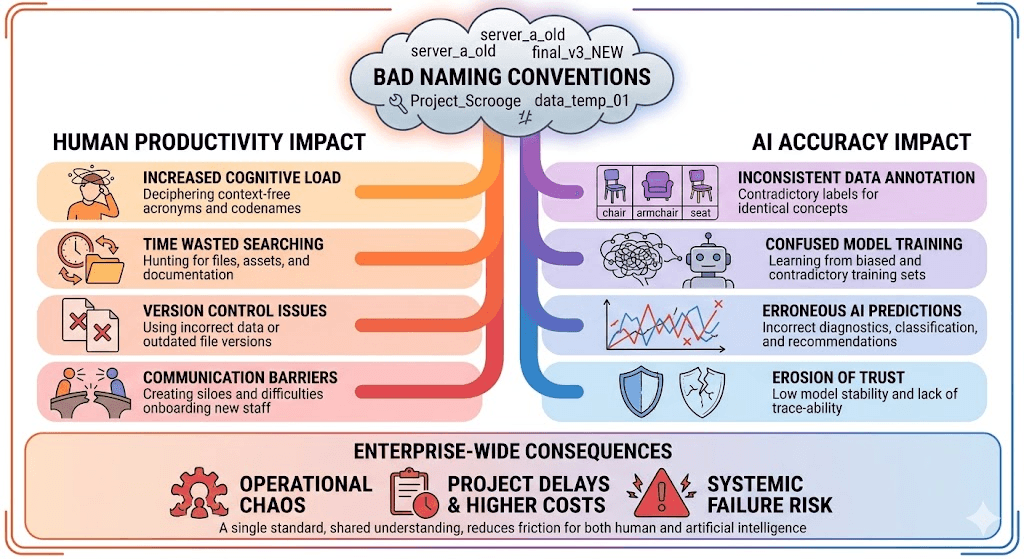
Read more →Please note, in this article, the term 'names' is meant to include the cognitive / linguistic aspects of naming in the software realm. 'Concepts' is perhaps a better term... i.e., the behavioral, cultural, political, operational dimensions of our organizational conceptual frameworks.
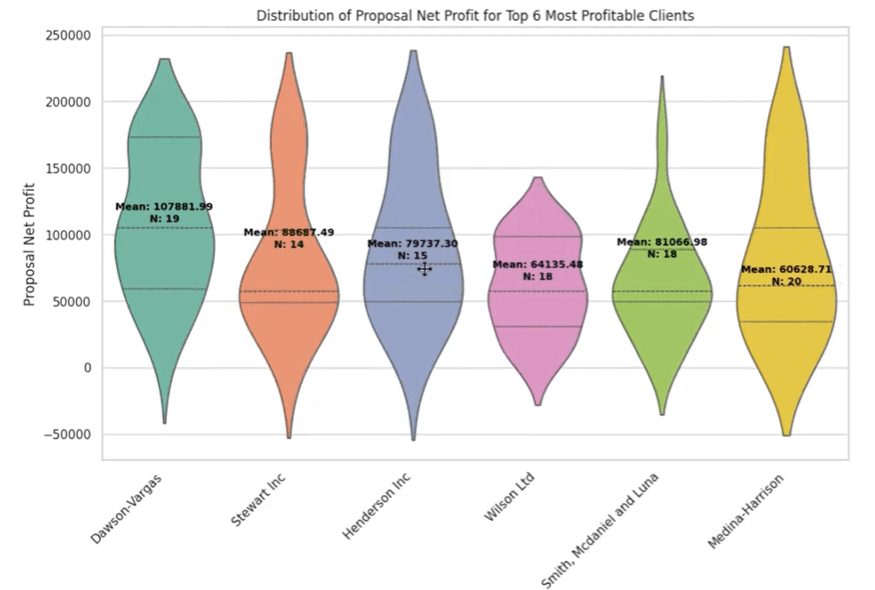
Read more →See the results of a 2-year research project to use AI inference and NLP interfaces to answer complex data analytics and data science queries.
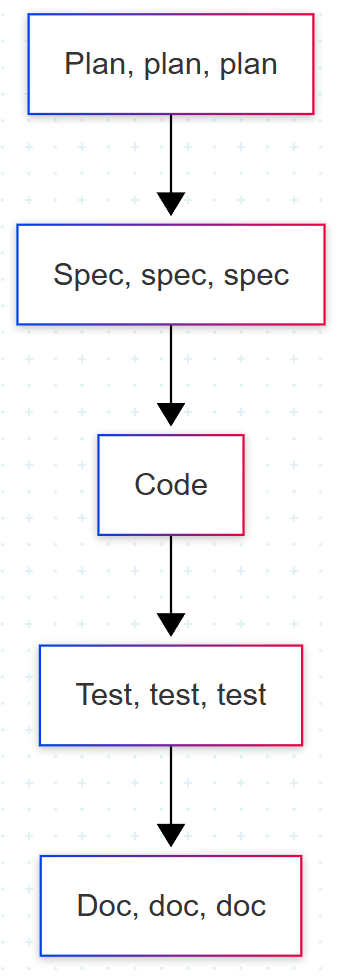
Read more →When developing with AI, it's what you do before and after coding that really matters... And how you manage LLM context space.
Read more →This sounds like a contradiction but before coding an AI agentic pipeline to handle a certain type of question, you should already know representative answers. Don't rely on your inline agent to manufacture your answers on it's own. Known-good answers (e.g., 'goldens') are a key accelerator for AI development.
Read more →Production AI systems need layered test-time evaluation driven by model confidence scores. Code-based business rules validate every response. Model judge panels catch edge cases when confidence dips. And for the highest-stakes scenarios, a virtual situation room of human experts and peer reviewers provides the ultimate quality gate. The key: not every answer needs the same scrutiny. Let confidence drive the escalation.
Read more →Psychometrics is showing up in AI engineering because evaluating and shaping the behavior of large models now looks a lot like evaluating and shaping human abilities, traits, and biases—which is exactly what psychometrics was built for
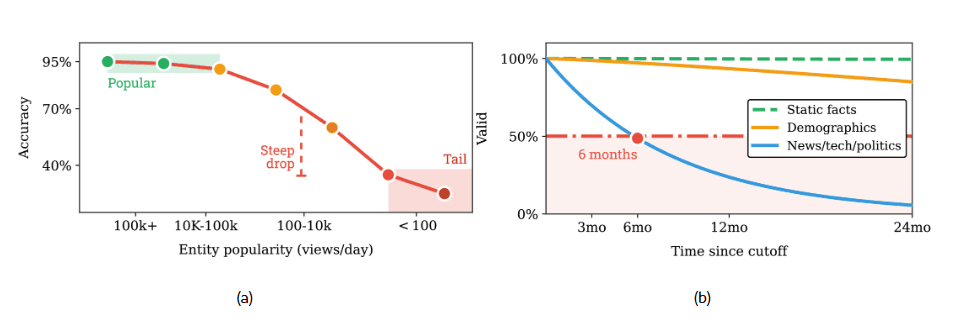
Read more →No matter how large a language model is and how well it’s trained there’s ‘laws of physics’ that limit the combinatorial complexity of the inference and retrieval that AI can accomplish
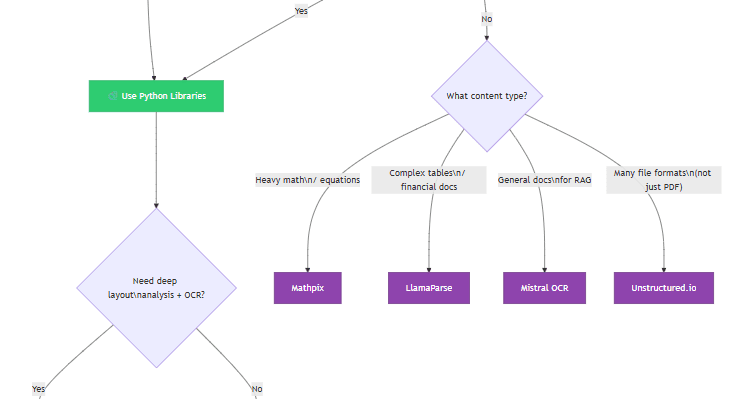
Read more →A practical guide to choosing between Python libraries like Marker, pypdf, pdfplumber, and Docling versus cloud services like LlamaParse, Mistral OCR, and Mathpix for parsing unstructured documents in AI applications.
Read more →As organizations move beyond experimental pilots into mission-critical deployments, a stark realization has emerged: the vector map is blurry... not accurate enough for many production transactional and operational apps.
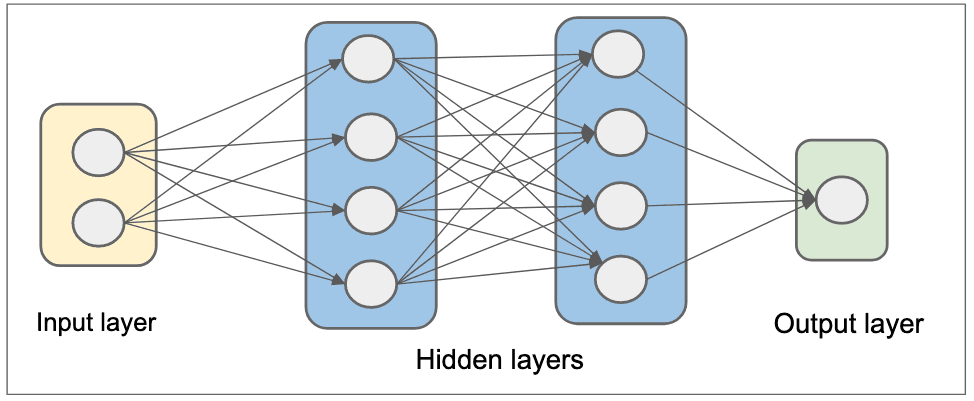
Read more →This high-dimensional space is where the model “thinks” or processes facts. By projecting data into a higher dimension, the model can “untangle” complex relationships and perform non-linear operations (using the activation function) that wouldn’t be possible in the compressed lower dimension.
Read more →Our mission is to give communities a fair deal when data centers come to town and become a permanent aspect of the local landscape.
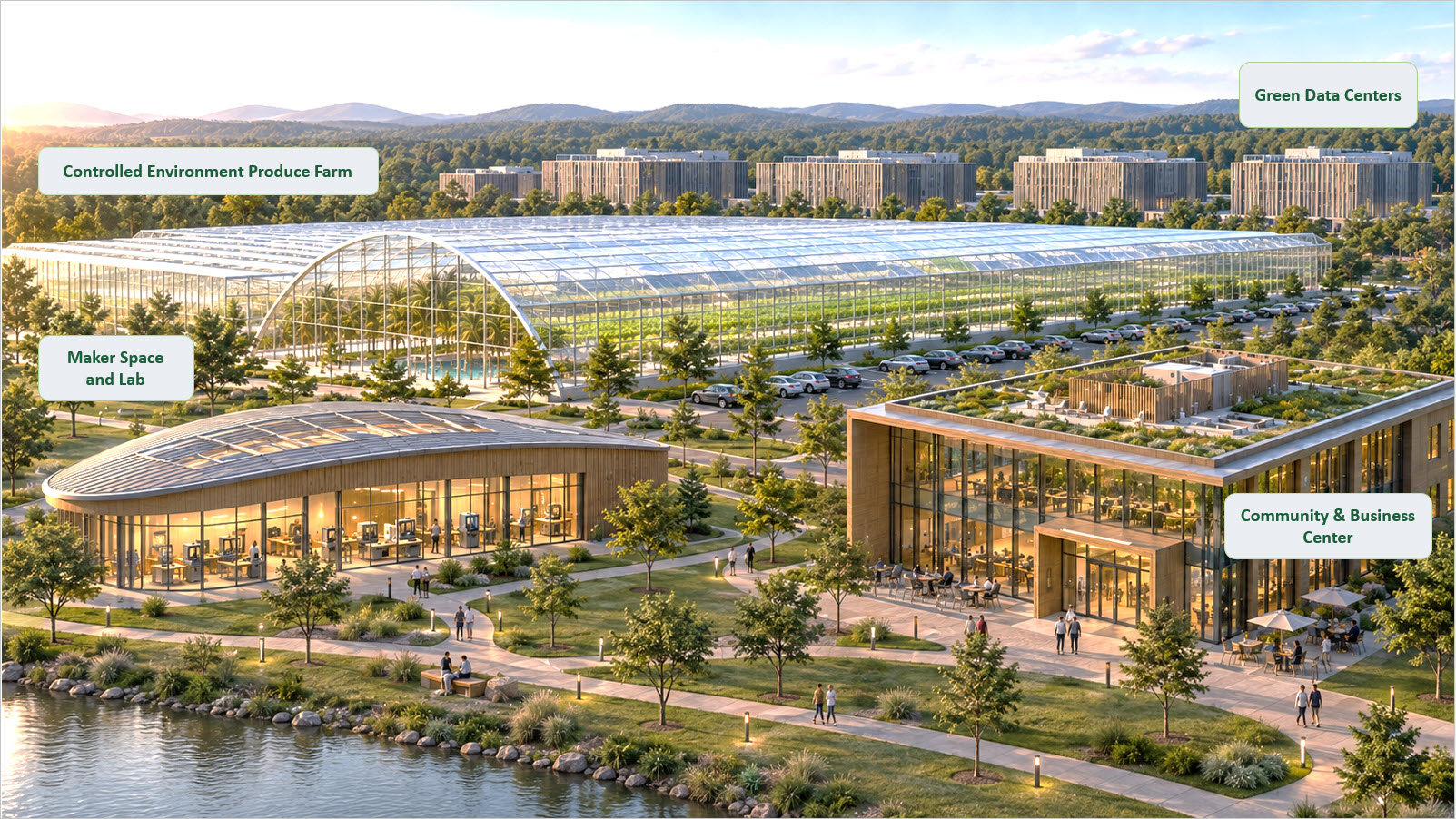
GreenPlex is a green living, playing, working campus built to answer the needs of the Citizens, a campus the community specifies. Organizationally, GreenPlex is comprised of formal partnerships between universities, communities, facilities developers, virtual energy providers, collaboration engineers and AI experts.
Let’s collaborate! Please get in touch:
The question isn’t whether communities should say yes or no to data centers. The question is why wait for data center developers to tell us what we’re getting.