
As models get deployed into high‑stakes, human‑facing roles, the bottleneck is less “can it predict tokens?” and more can we measure, predict, and control its behavioral profile?”
What psychometrics actually brings
Psychometrics is the science of measuring latent constructs like ability, personality, values, and attitudes using tests, item-response models, and rigorous reliability/validity frameworks.
It has decades of methods for turning noisy performance on many tasks into stable estimates of underlying traits and predicting real‑world outcomes from those traits.
Why this matters for modern AI
- LLMs are now “general‑purpose” systems evaluated across hundreds of heterogeneous tasks, where simple leaderboards are noisy and often invalid as true measures of capability.
- Psychometric, construct‑oriented evaluation is being proposed as a replacement for ad‑hoc benchmarks: instead of “score on 200 tasks,” define constructs (reasoning, robustness, moral judgment, etc.) and build item banks that reliably measure those constructs in models.
RLHF / human ratings are noisy, and psychometrics is “noise engineering”
When you train or evaluate with human judgments (helpfulness, safety, quality), you immediately run into:
- rater disagreement,
- rubric drift,
- inconsistent scales,
- bias/leniency/harshness differences across raters.
Psychometrics brings the toolkit to make those ratings reliable and interpretable (and to tell you when they aren’t).
Roles psychometrics plays in AI jobs
- Model evaluation & benchmarking: Researchers are building psychometric-style test batteries to measure LLM capabilities, consistency, and robustness (e.g., reliability across rephrasings, adversarial items, or different contexts).
- Safety, alignment, and personality: Work in AI safety uses personality scales, value surveys, and attitude measures to detect undesirable traits, steer model “personality,” and meet emerging regulatory requirements for behavioral audits.
Connection to “context engineering”
Context engineering focuses on designing what information, instructions, user metadata, and environmental cues go into the model’s context window so its behavior matches the desired task and role.
Psychometrics gives a principled way to measure how those context choices affect latent behavioral constructs (e.g., risk‑taking, deference, persuasiveness, bias), so you can treat context setups like experimental conditions and optimize them systematically rather than by guesswork.
As AI moves into hiring, education, healthcare, and governance, organizations need people who can design fair, valid, bias‑aware measurements of both humans and AI systems.
This creates demand for hybrid profiles who understand item design, validity, and fairness and can apply those to LLM evaluation, alignment, and safety—hence “psychometrics” showing up next to roles like context engineering in AI job discussions.
Testing Test-Time Compute
"A psychometric framework for evaluating and shaping personality traits in large language models"
https://www.nature.com/articles/s42256-025-01115-6
"As LLMs increasingly power conversational agents used by the general public worldwide, the synthetic personality traits embedded in these models by virtue of training on large amounts of human data are becoming increasingly important to evaluate. The style in which LLMs respond can mimic different human personality traits. Here, as these patterns can be a key factor determining the effectiveness of communication, we present a comprehensive psychometric methodology for administering and validating personality tests on widely used LLMs, as well as for shaping personality in the generated text of such LLMs."
"Applying this method to 18 LLMs, we found that: personality measurements in the outputs of some LLMs under specific prompting configurations are reliable and valid; evidence of reliability and validity of synthetic LLM personality is stronger for larger and instruction-fine-tuned models; and personality in LLM outputs can be shaped along desired dimensions to mimic specific human personality profiles. We discuss the application and ethical implications of the measurement and shaping method..."
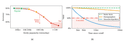
The human baseline (the blue bars) comes from prior research showing how well human IPIP-NEO scores predict the personality reflected in humans' real social media posts. The baseline is about predictive validity — how well a personality test score predicts actual behavior (writing social media posts).
So why do the LLMs (the colored bars) generally beat the human baseline? A few likely reasons: LLMs are more internally consistent. When you tell an LLM to adopt a personality (e.g., "be highly agreeable"), it tends to express that personality uniformly — both in how it answers questionnaire items and in how it writes text.
Humans are messier. A person might score high on agreeableness on a test but then post something snarky on social media because they're tired, stressed, or just being situational. Real human behavior is noisy and context-dependent in ways that LLM outputs aren't. LLMs rely on the same underlying text patterns for both tasks.
When an LLM answers a personality questionnaire and when it writes a social media post, it's drawing on the same learned associations between personality-related language and text style. So there's a tight coupling between "test answers" and "text generation" that doesn't exist as strongly in humans, where the test taps into self-reflection but behavior is shaped by mood, social context, habits, etc. Humans have a self-perception gap.
People sometimes see themselves differently than how they actually come across in writing. An LLM doesn't have that disconnect — it doesn't have a "true self" that diverges from its outputs. In short, the higher correlations for LLMs don't necessarily mean the tests are better for LLMs — it more likely reflects that LLMs are simpler and more predictable systems than humans when it comes to the relationship between stated personality and expressed behavior.