
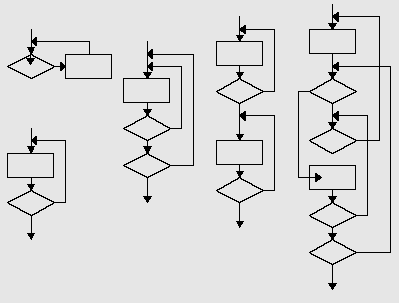
AI Models are stochastic language processors, which becomes a serious challenge when developers attempt to build deterministic applications that require up to three 9's of accuracy or more. Unlike traditional software where the same input reliably produces the same output, large language models can generate subtly different responses each time they are called. In mission-critical domains such as finance, healthcare, transportation, and legal, this variability is not just inconvenient — it is potentially dangerous.
💡 The solution is not to avoid using AI, but to wrap AI inference in rigorous evaluation and validation loops that catch errors before they reach end users.
The Five-Layer Evaluation Funnel
The key insight is that test-time evaluation should be a layered, confidence-driven process. Not every answer requires the same level of scrutiny. When the primary inference model assigns a high confidence score and cites a verifiable source of truth, routine answers can flow through quickly with minimal overhead. But when confidence is low, the input data is ambiguous, or the end user is a high-value stakeholder dealing with business-critical decisions, the system should automatically escalate through progressively more rigorous evaluation tiers.
Think of it as a five-layer funnel:
- 🔹 Layer 1 — AI Inference Pipeline: Pattern-matched instant response generation
- 🔹 Layer 2 — Workflow AI Model: Process and task orchestration that routes the query through the right evaluation path
- 🔹 Layer 3 — Domain AI Model: Specialized knowledge and reasoning applied to industry-specific problems
- 🔹 Layer 4 — Judge / Validator AI: Quality evaluation and validation by one or more independent model judges
- 🔹 Layer 5 — Human Expert: Augmented experts who provide final judgment and creative oversight for the most critical cases
Here are the three primary categories of test-time evaluation that every production AI system should implement:
1. Code-Based Evaluation: Applying Business Rules to LLM Answers
⚙️ Fast, cheap, and deterministic — every answer should pass through this layer regardless of confidence level.
The first line of defense should always be the model itself combined with deterministic code checks. Have the model check its own work: think in steps, ask clarifying questions of the end user, and compare its results to a known benchmark for accuracy. But self-checking alone is not enough.
In an agentic pipeline, the model's answer should be verified by business logic encoded in traditional software. This means writing validation functions that apply hard rules to every LLM response before it is returned to the user.
What code-based checks can verify:
- Numerical accuracy: Do the numbers add up? Are referenced account balances correct?
- Regulatory compliance: Are legal and regulatory thresholds respected?
- Schema validation: Does the output format match the expected structure?
- Source verification: Can the cited facts be cross-checked against authoritative databases or APIs?
- Boundary conditions: Are edge cases handled? Are outputs within acceptable ranges?
Models can also call external tools and APIs to cross-check facts against authoritative data sources, databases, or calculation engines. Code-based evaluation is the ideal front line of your validation pipeline because it adds negligible latency and runs at virtually zero marginal cost.
2. Model Judges: One or More Models Evaluate Each Answer
🧑⚖️ A panel of AI judges can evaluate answers from several points of view — accuracy, consistency, tone, and compliance — simultaneously.
After an answer is generated by the primary inference model, a second judge model can evaluate the response for correctness, completeness, tone, and adherence to domain-specific standards. This is where the architecture gets especially powerful.
A single judge model provides a useful second opinion, but a panel of judge models can evaluate the answer against multiple correctness criteria simultaneously:
- 📊 Factual accuracy judge: Verifies claims against known data sources
- 🔗 Logical consistency judge: Checks for contradictions and reasoning errors
- 👥 Audience appropriateness judge: Evaluates whether the response fits the user's context and expertise level
- 📋 Regulatory compliance judge: Confirms adherence to industry-specific language and disclosure requirements
The panel approach mirrors how peer review works in academic publishing, where multiple reviewers with different expertise examine the same work.
When to invoke the judge panel:
Critically, the model judge layer should be invoked selectively based on the confidence signal from the primary model. When the front-line inference model returns a high confidence score along with a citation to a verified source of truth, routine answers can bypass the judge panel entirely and go straight to the user. This keeps latency low and costs manageable for the majority of queries.
However, when the primary model flags uncertainty, when it cannot cite a reliable source, or when the query falls into a domain known for ambiguity, the judge panel should be triggered automatically. Domain-specialized models that have been fine-tuned on industry-specific knowledge are particularly effective judges because they bring focused expertise that a general-purpose model may lack.
3. Human Experts and Peer Review Evaluation Committees
👨🔬 Humans cannot easily evaluate LLM outputs in real time — but with a virtual 'situation room,' a network of experts and peer reviewers can be alerted and respond in near real time.
When the stakes are highest and correctness is absolutely paramount — financial advisory, healthcare diagnosis, transportation safety, legal compliance — there is no substitute for human judgment. Build a human loop into the application flow for these critical scenarios.
But here is the practical challenge: humans cannot easily evaluate LLM outputs in real time at the speed and volume that AI systems produce them. The solution is a virtual situation room model. Rather than expecting a single expert to be on call at all times, create a network of domain experts and peer reviewers who can be alerted and respond in near real time when high-stakes answers require validation.
How the virtual situation room works:
- 🚨 Alert triggers: The system monitors for low AI confidence, highly ambiguous input data, or high-value end users whose decisions carry significant business impact
- 📋 Case routing: Flagged answers are packaged with the original query, the model's response, confidence scores, and judge panel assessments, then routed to the situation room
- 👥 Collaborative review: If the top domain expert is unavailable, a group of peer knowledge workers can deliberate and agree on a validated response using collaborative thinking
- ⏱️ Async flexibility: The system queues flagged items, sends push notifications, and aggregates responses asynchronously while keeping the end user informed that their query is undergoing enhanced review
Think of this as the AI equivalent of a hospital's rapid response team — the system only activates the full team when critical conditions are met, but when it does, the team arrives prepared with all the context they need.
The Confidence-Driven Escalation Loop
🎯 The primary front-line inference model should assign a confidence level and cite a source of truth with every answer. This confidence signal is the routing mechanism that determines how deep into the evaluation stack each query needs to travel.
The entire evaluation architecture works best when it is driven by confidence scoring at the point of inference:
🟢 High Confidence → Code Checks Only
For routine answers where the model has high confidence and can point to a verified source, the response passes through the code-based checks and goes directly to the user with minimal latency. No need to invoke the LLM judge panel or bother human reviewers for straightforward, well-supported answers.
🟡 Medium Confidence → Model Judge Panel
For medium-confidence answers, the model judge panel is activated. Multiple AI evaluators examine the response and either approve it, request a revision from the primary model, or escalate it further up the chain. This middle tier handles the bulk of edge cases that code alone cannot catch but do not yet warrant pulling in human expertise.
🔴 Low Confidence + High Stakes → Human Situation Room
In the extreme case — the combination of high-value end users, business-critical issues, and high ambiguity in the input data — answers are escalated to the top tier: human experts in the virtual situation room. These are the cases where the cost of being wrong far exceeds the cost of the delay introduced by human review.
The human experts are augmented by all the AI analysis that preceded them. They do not start from scratch. They receive the original query, the model's answer, the confidence scores, the judge panel's assessments, and the specific reasons the system flagged the response for escalation. This makes the human review faster and more focused than it would be without AI support.
Loop for Accuracy — Always
🔄 The beauty of this layered approach is that it scales intelligently: most queries resolve quickly and cheaply at the code layer, a smaller subset triggers the model judges, and only the truly critical cases reach the human situation room.
So no matter what type of content and transactions you are processing with AI, always LOOP FOR ACCURACY. Loop with code-based business rules on every single response. Loop with judge models when confidence dips or the domain demands it. Loop with peer review committees and expert humans when the stakes are at their highest. Anything is possible with AI, as long as you loop in the right reality checks at the right time.
Example of near 100% accuracy ( F1) for NLU/NLP customer facing voice agent in the transportation industry.
- Rules/grammars handled narrow phrases and deterministic flows.
- Statistical NLP handled intent ranking and entity extraction from varied wording.
- Transformer models such as joint BERT also fit into the same intent-plus-slot architecture.